Product Design: Offline Cashier Systems — Terminal Abstraction Layer
In offline cashier scenarios such as supermarkets and chain restaurants, merchants often need:
- To distinguish different checkout devices — user-scanned payment QR codes, POS terminals, barcode scanners, WeChat palm-pay devices, and so on
- To distinguish orders by counter — large stores often have multiple checkout lanes
- To break down sales by cashier at the same counter for attendance or performance
Online e-commerce payment logic usually stops at store level: the user pays under a store. That granularity is not fine enough for offline merchants’ operational needs.
So offline cashier systems introduce the terminal concept.
A terminal is an abstraction — not a physical entity, but a hub that connects multiple entities.
A terminal can provide:
- Pluggable binding of different payment device types
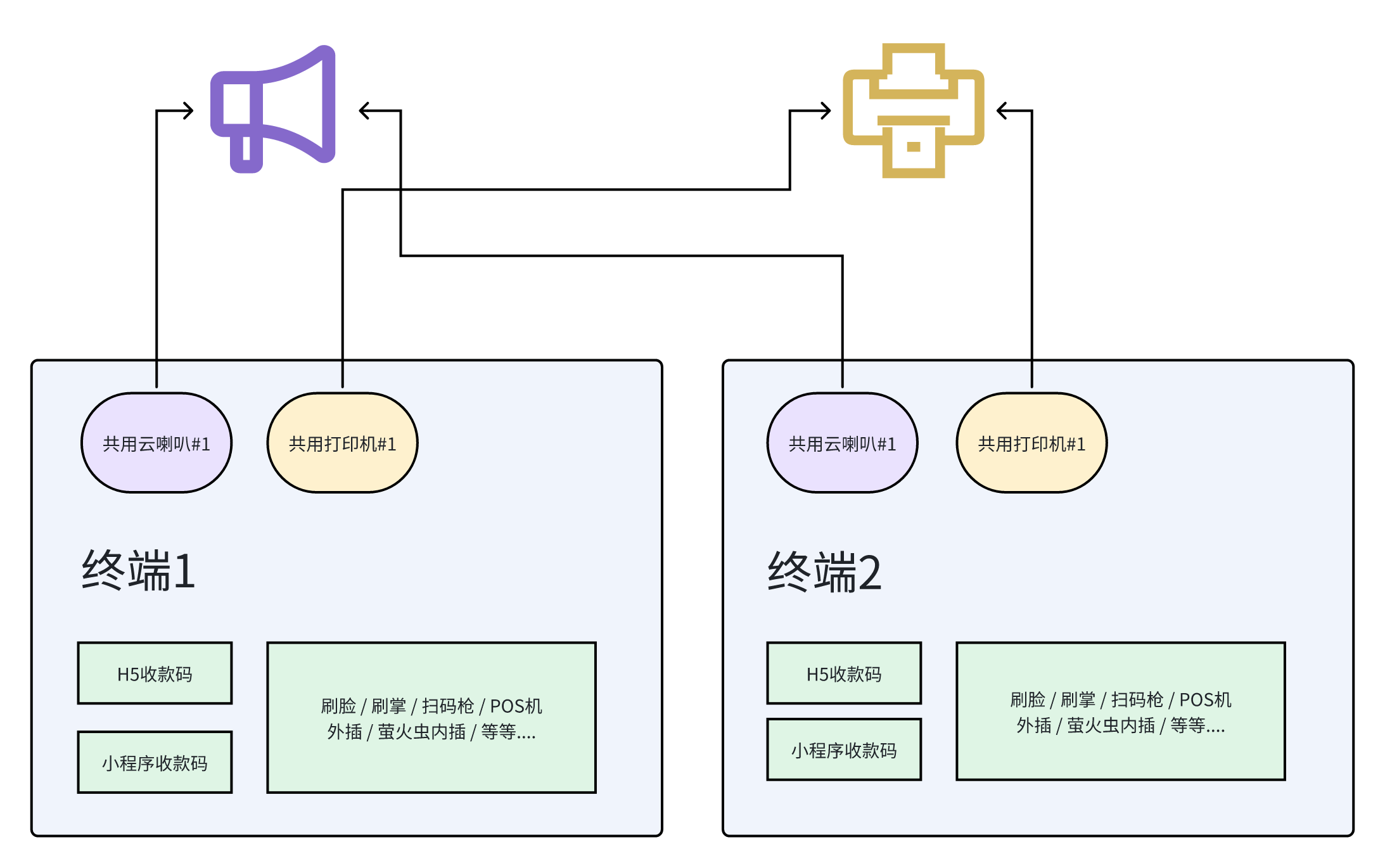
- Pluggable shared devices such as receipt printers and cloud speakers
- Unlimited merchant-defined terminals for different reconciliation needs and finer operations
Figure 1: The terminal as a middle layer, giving pluggable association between cashier devices and merchant stores
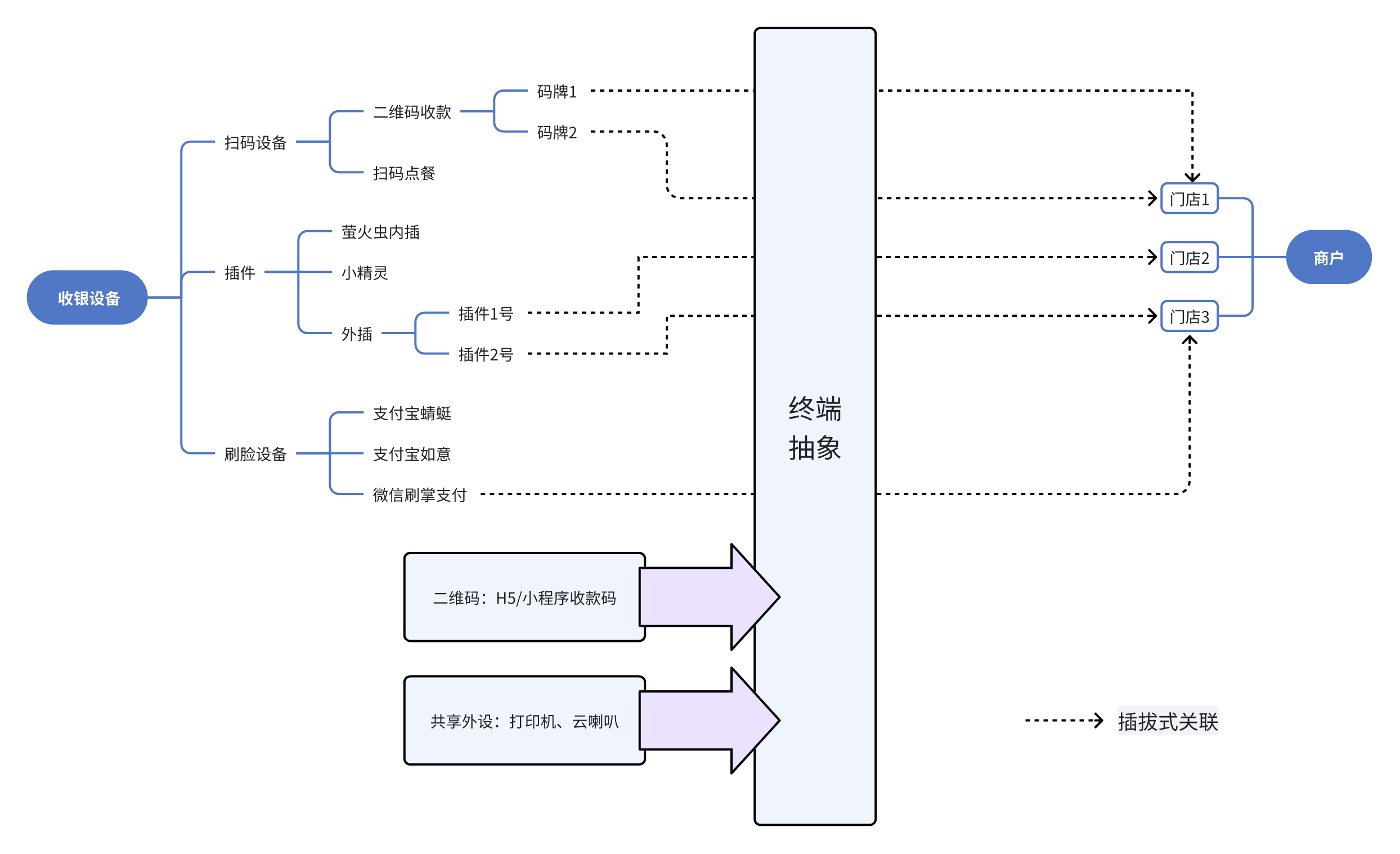
Figure 2: Terminals linked to cashier devices and shared devices
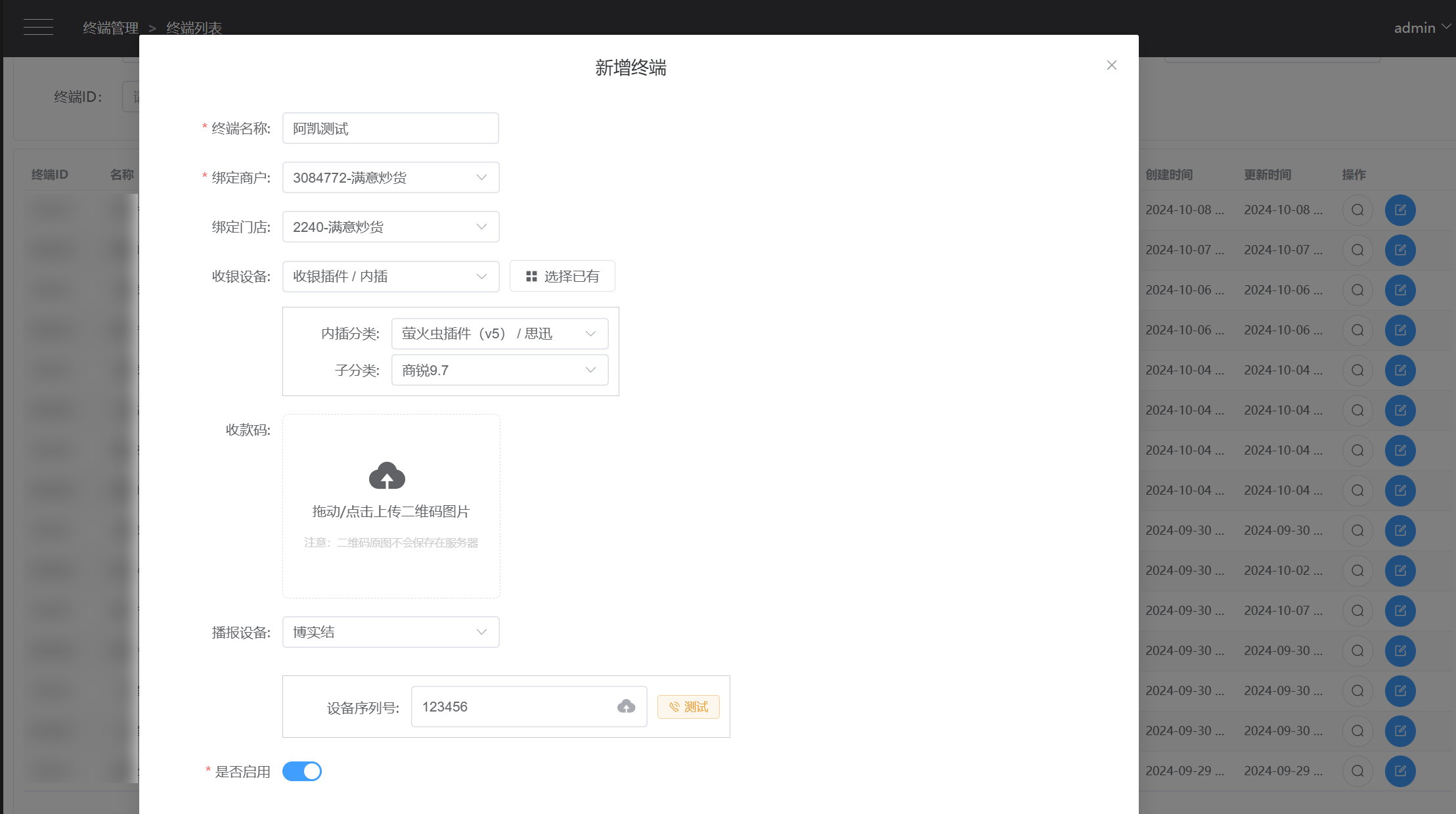
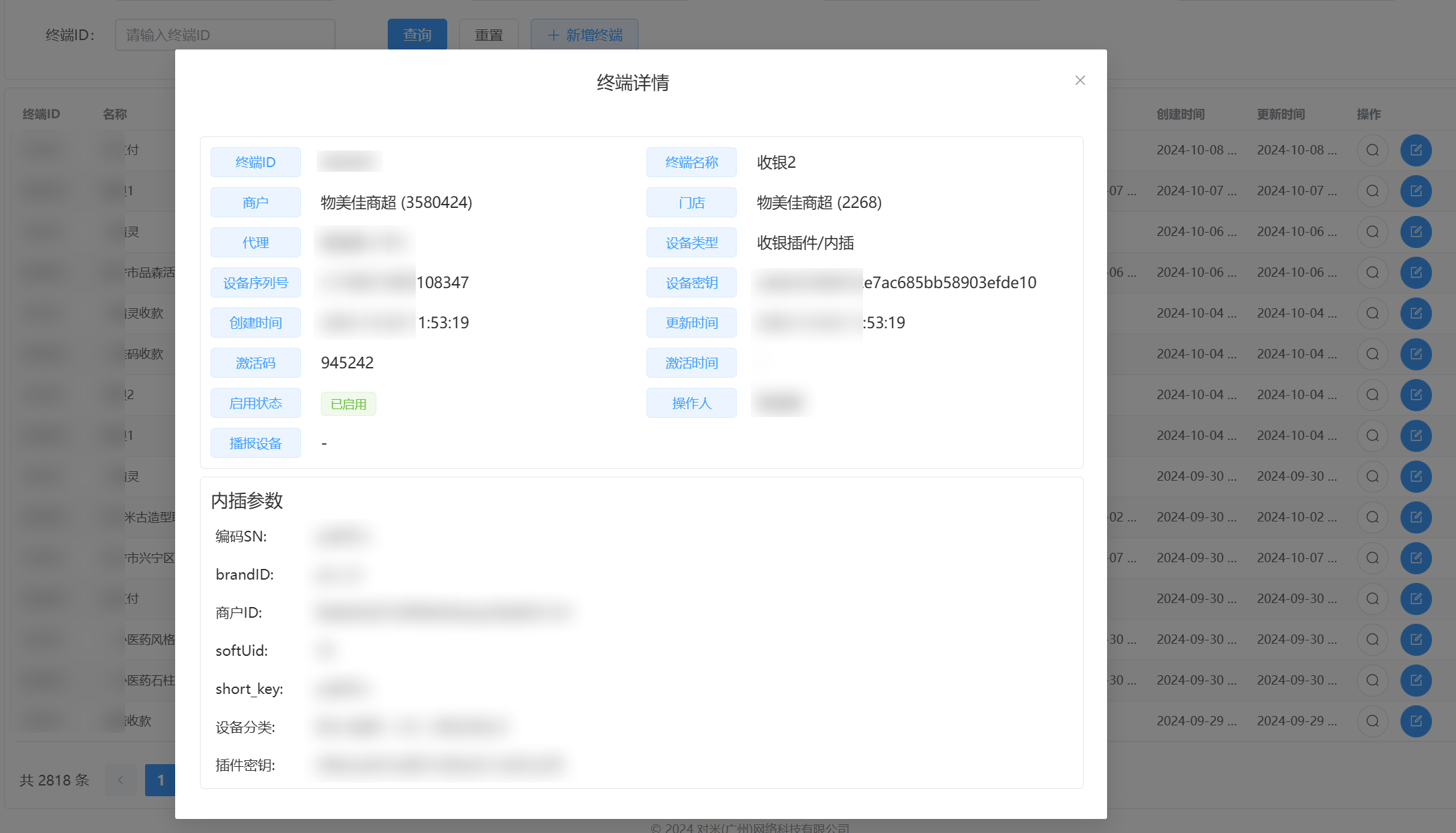
System screenshots